
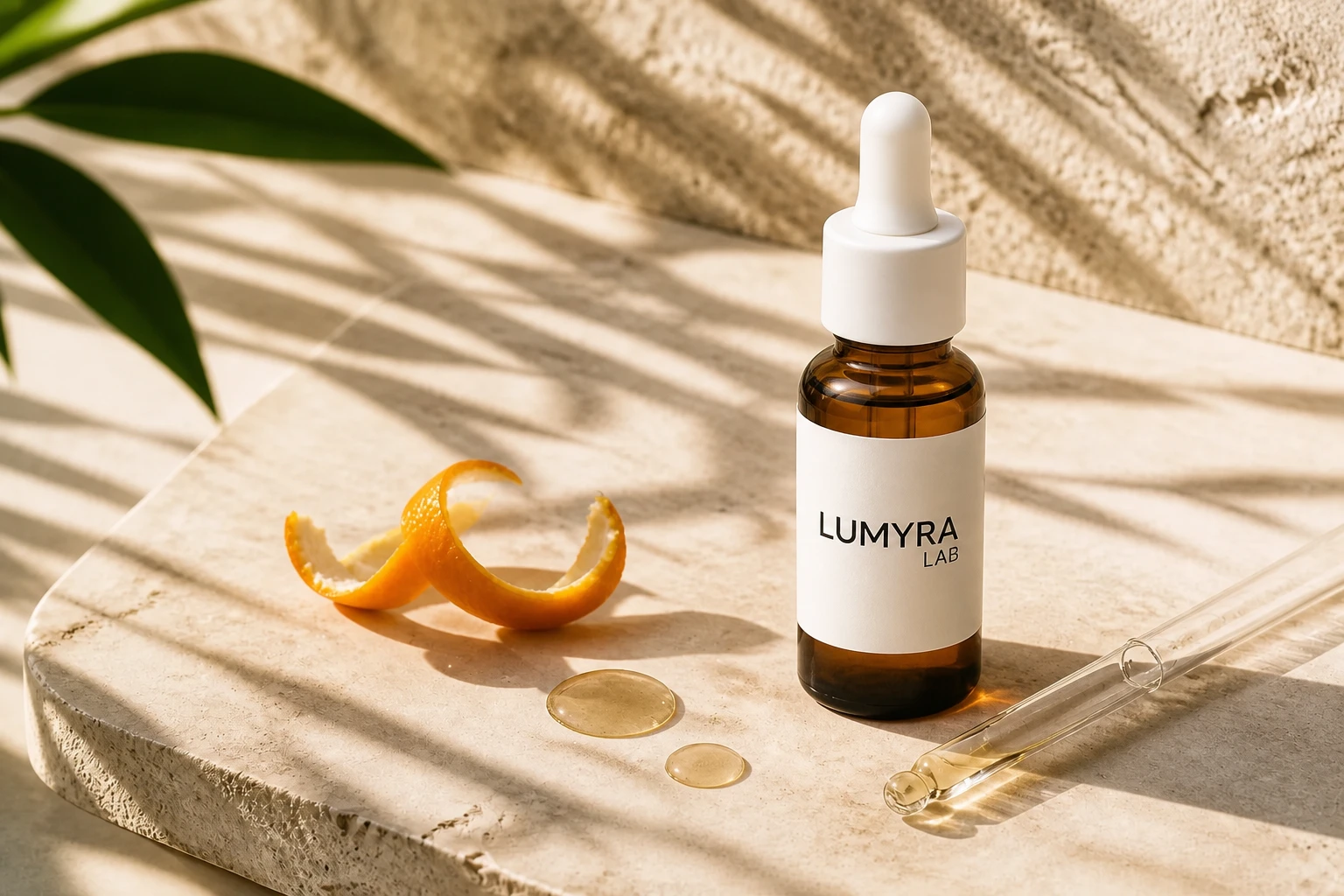
Vitamin C is the most studied antioxidant in skincare and the most badly sold. Here is what it does, what it does not do, and why the bottle it comes in matters as much as the percentage on the label.
What an antioxidant actually does
Daylight, pollution and ordinary metabolism all generate free radicals in the skin. Left alone they damage collagen and contribute to uneven tone. An antioxidant is a molecule that gives up an electron to neutralise them before that happens.
This is preventive work, not corrective. Vitamin C applied in the morning is there for the day ahead. It is not undoing yesterday, and it is not a substitute for sunscreen. It works alongside one.
Why the form matters more than the number
Ascorbic acid is the form with the most research behind it. It is also the least stable: it oxidises on contact with light, air and warmth, and once it does it stops working. That is why a serum darkening from clear to amber over its life is normal, and why a bottle that arrives already dark is not worth using.
Two ingredients change that maths, and they are the reason 02 is formulated the way it is:
- Ferulic acid stabilises ascorbic acid and extends its useful life in the bottle.
- Vitamin E works on the lipid side of the cell membrane, where vitamin C cannot reach, so the pair covers more ground than either alone.
That combination is well documented, which is why ascorbic acid sits here at 15%, alongside ferulic acid and vitamin E, rather than on its own at a higher concentration.
What the B is doing there
There is a third ingredient in the name that does a different job entirely. Panthenol, also known as pro-vitamin B5, is not part of the antioxidant work; it is there to keep skin comfortable while that work happens.
Direct ascorbic acid can feel sharp on some skin, especially at first. Panthenol is a humectant: it draws water into the skin and helps the barrier hold onto it, which softens that edge without diluting the active.
So the serum carries two different kinds of work under one name. Ferulic acid and vitamin E keep the ascorbic acid active and extend its reach. Panthenol keeps the skin comfortable while it does. Neither substitutes for the other, which is why both roles are covered in the same bottle.
How to use it without wasting it
Apply to clean, dry skin in the morning, before heavier layers. Give it a moment to absorb. Keep the bottle closed and away from the window.
Vitamin C and exfoliating acids do not need to be used in the same routine, and on reactive skin they are better apart. In the Lumyra order, 02 is a morning step and 03 is an evening one, which keeps them separated without anyone having to think about it.
02 Vitamin C publishes its full ingredient list, with the share of each one, on its product page.